The 1% Rotation That Will Send Bitcoin To New Highs
Aug. 28, 2026
Author: Matt - Director of Research & Analytics
Bitcoin Magazine Pro is now Look Into Bitcoin.
Same platform, same team, same subscription: only the name and web address have changed. All old links redirect automatically. You don’t need to do anything differently.
It’s good to be home. Find us at lookintobitcoin.com.
The recent explosive Bitcoin move caught many off guard (although hopefully not too many of our audience!), with just how fast BTC can rally. The reality is that we don’t necessarily need over a trillion dollars of inflows to send the price to new all-time highs, a considerably smaller amount of accumulation is required to send prices exponentially higher due to the money multiplier effect.
What the data says this week:
- Over 80% of the circulating bitcoin supply is illiquid.
- Two separate methods land on the same money multiplier of 5x to 6x.
- Bitcoin is 0.25% of a $564 trillion global capital pool, twelfth on the list of individual assets and companies.
- Reaching the previous all-time high again takes roughly $272 billion of real inflows.
- Shift 1% out of gold and private markets, plus 0.1% of global equities, and Bitcoin would sit near $250,000.
Why $1 Moves $5
The money multiplier exists because Bitcoin's market cap doesn't move dollar for dollar with the capital entering it. Put $1 in, and the market cap rises by more than $1, because the marginal buyer is bidding for a far smaller pool of coins than the total supply suggests. The usual way to size that effect is through illiquid supply. Long-Term Holder Supply sits above 80% of circulating bitcoin, and those coins won't come to market at any realistic price, so only about 20% of the supply is actually available. On that basis each dollar of inflow moves the market cap by roughly five.
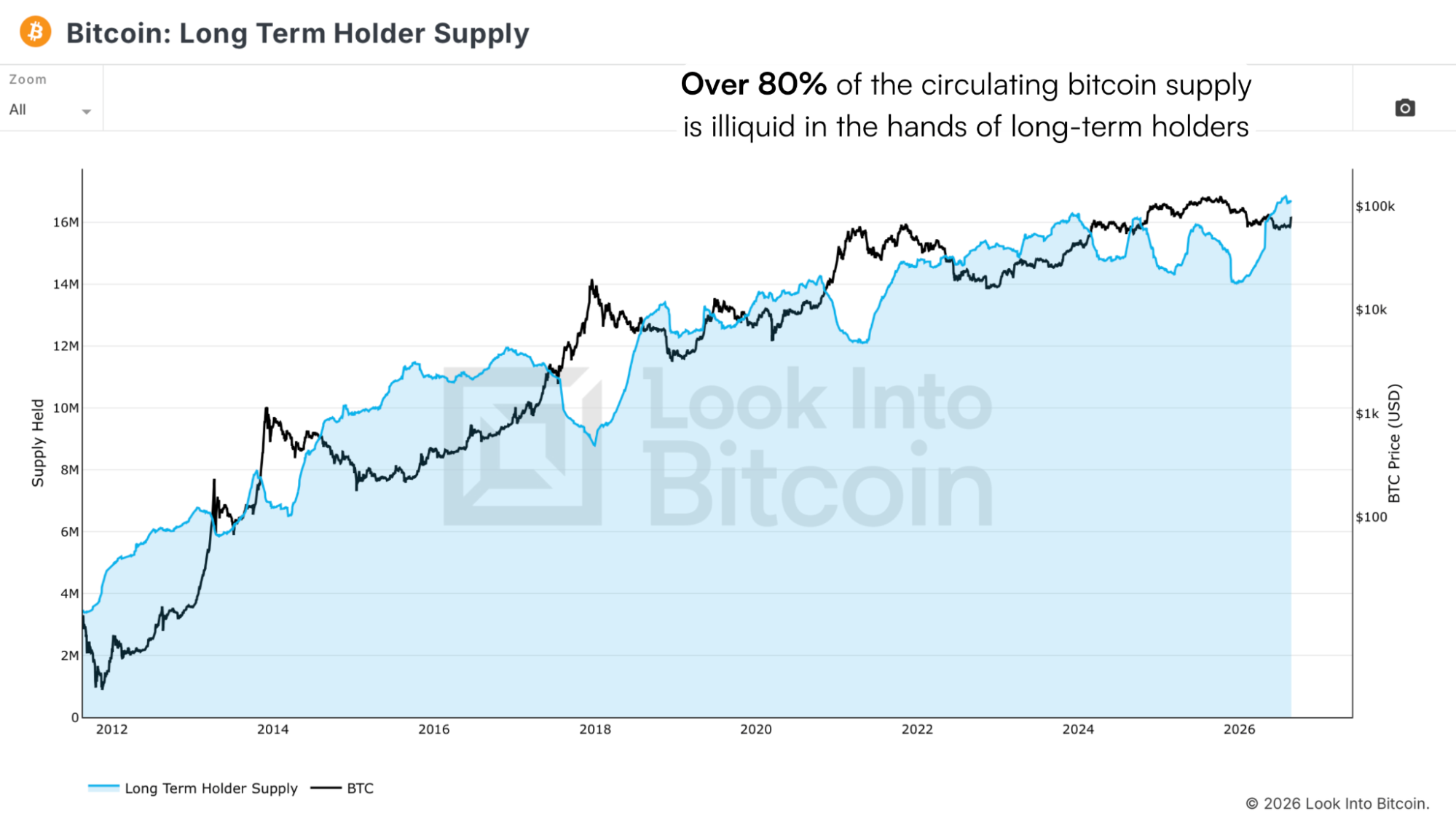
Figure 1: Long-Term Holder Supply holds above 80% of circulating bitcoin.
Swap the static 155-day long-term holder boundary for the dynamic one we covered recently, closer to 115 days, and the illiquid share climbs to around 85%, which pushes the multiplier slightly higher, although supply-based estimates are useful but can be indirect. Compare the 90-day change in Bitcoin's market cap with the 90-day change in its realized cap and you get a direct read on how much market value each dollar of genuine accumulation creates. The realized cap only moves when coins actually change hands at new prices.
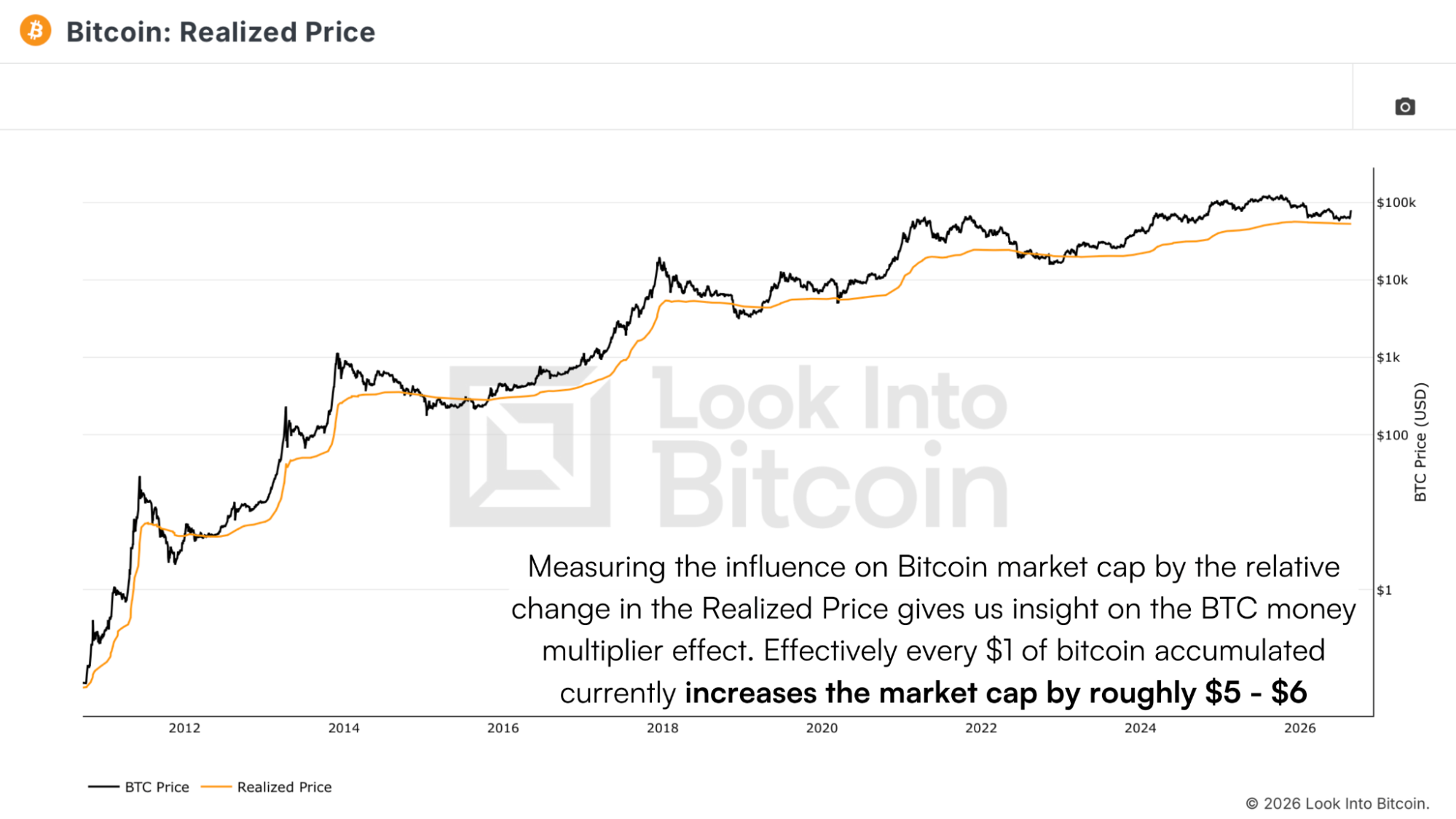
Figure 2: Each $1 of bitcoin accumulated currently lifts market cap by $5 to $6.
That calculation lands in the same place, roughly 5 to 6 times. One method rests on supply availability, the other on observed capital flows, and they agree. For an estimate like this, that is about as much confirmation as you get. I'll use 5x for everything that follows, which keeps things conservative.
Bitcoin Is Still Tiny
The multiplier matters because Bitcoin is still small against the assets it gets compared to. Ranked by market cap alongside individual assets and companies it sits twelfth, behind gold, silver, and multiple global stocks.
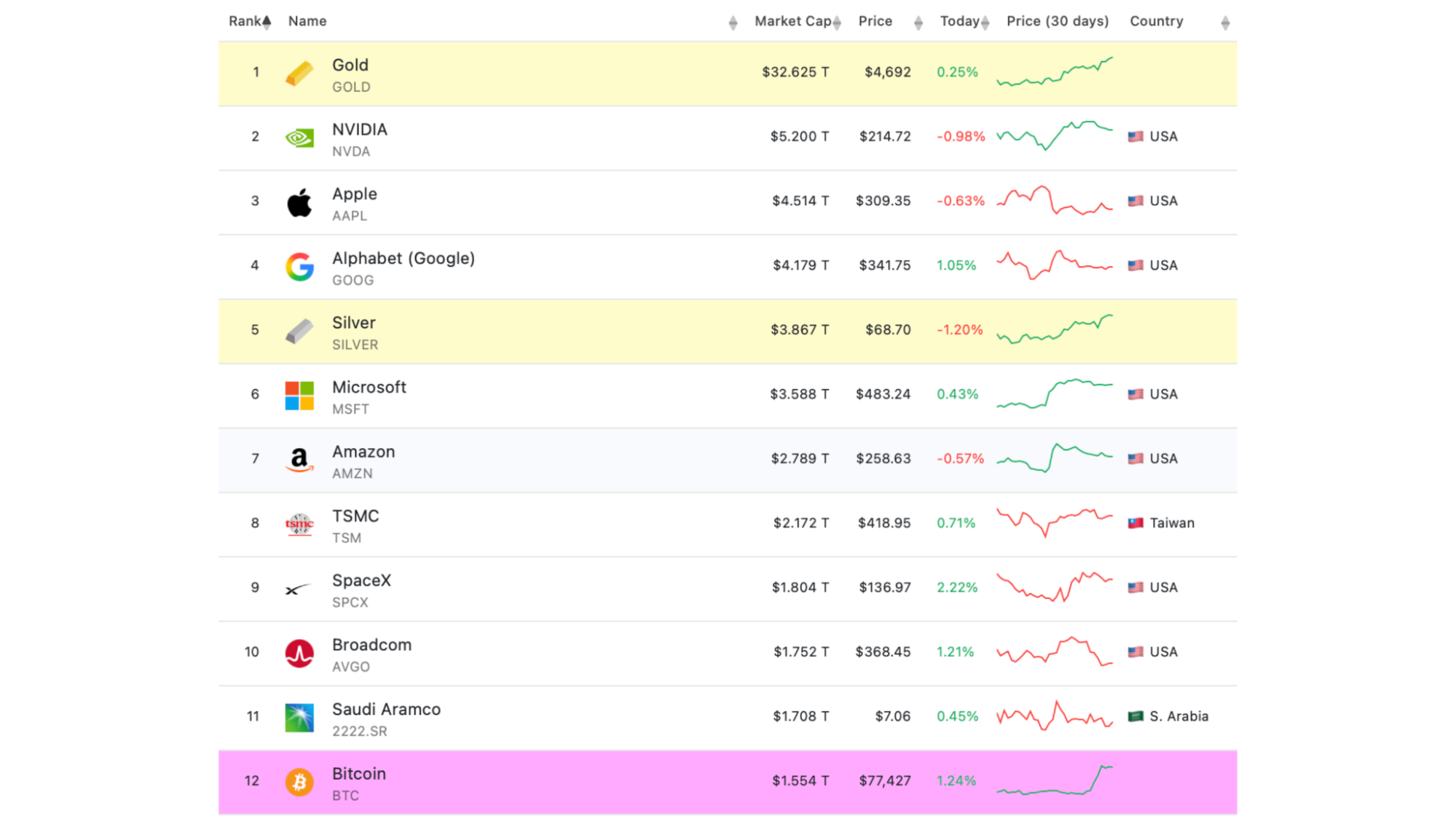
Figure 3: Bitcoin ranks twelfth by market cap, below gold, silver, and big tech.
Set that against the whole pool of global capital, and Bitcoin is roughly 0.25% of $564 trillion. Equities account for around $173 trillion, bonds $131 trillion, broad money another $130 trillion, real estate $50 trillion, and gold $32 trillion. Bitcoin is ~$1.4 trillion of that.
What 1% Buys
Bitcoin's market cap needs to climb roughly $1.36 trillion to reclaim its previous all-time high. Apply the conservative 5x multiplier, and the capital required is around $272 billion. A quarter of a trillion dollars is a lot of money in isolation. But set against gold, which ran to roughly $39 trillion at its peak this year before retracing to $32 trillion, it is much less than 1% of gold's market cap.
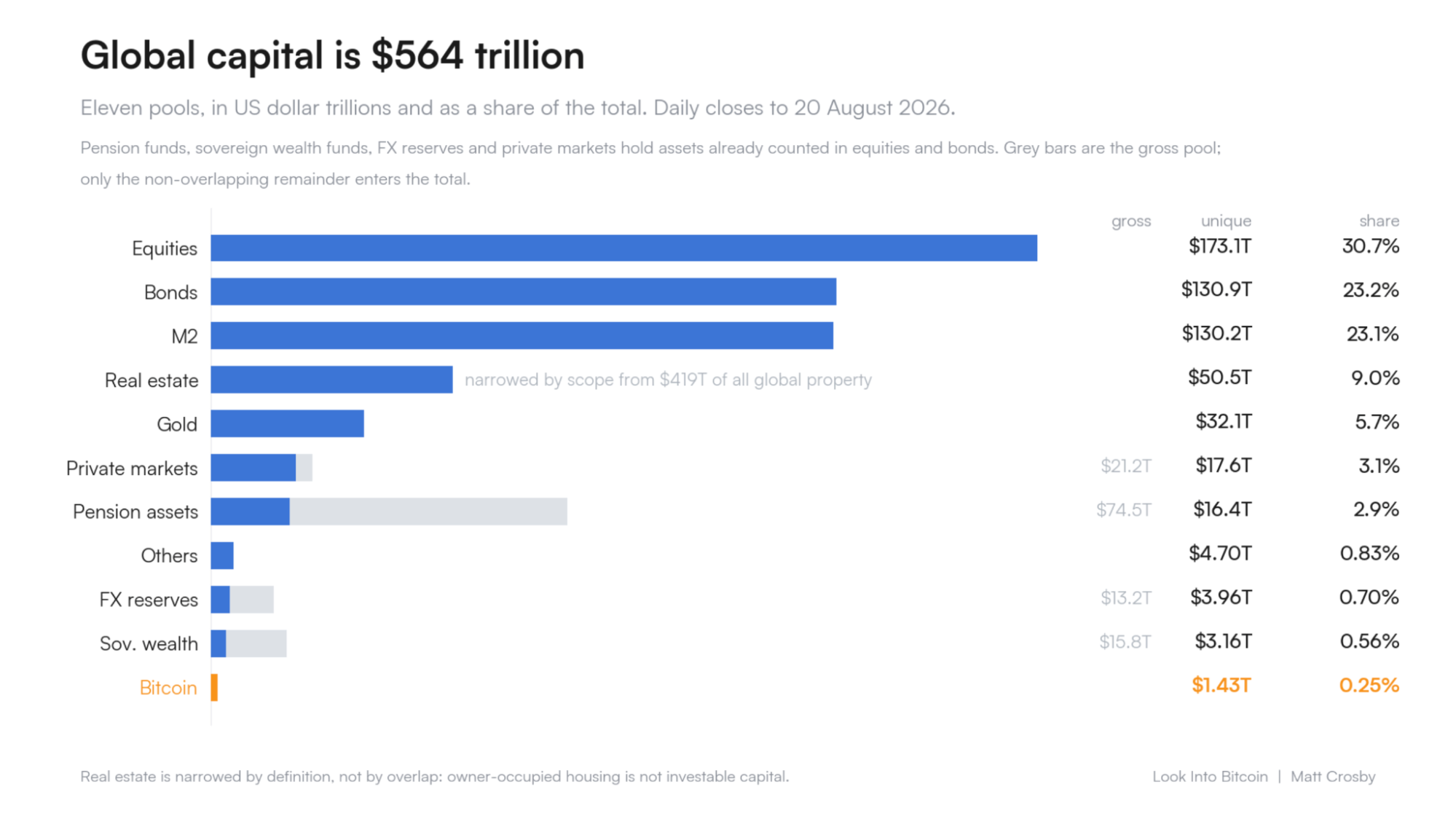
Figure 4: Global capital totals $564 trillion, with Bitcoin at 0.25%.
Now suppose 1% rotated into Bitcoin from gold, from net private markets, and from just a tenth of global equity markets, ignoring bonds, real estate and pension assets entirely. That is roughly $700 billion of actual capital. At 5x, it takes Bitcoin's market cap to around $5 trillion, or roughly $250,000 per bitcoin.
The Target Moves Upwards
Global capital compounds, and that moves the target. The same percentage share of global wealth will be worth roughly 2.1x more by 2036 than it is today, based on historical growth rates.
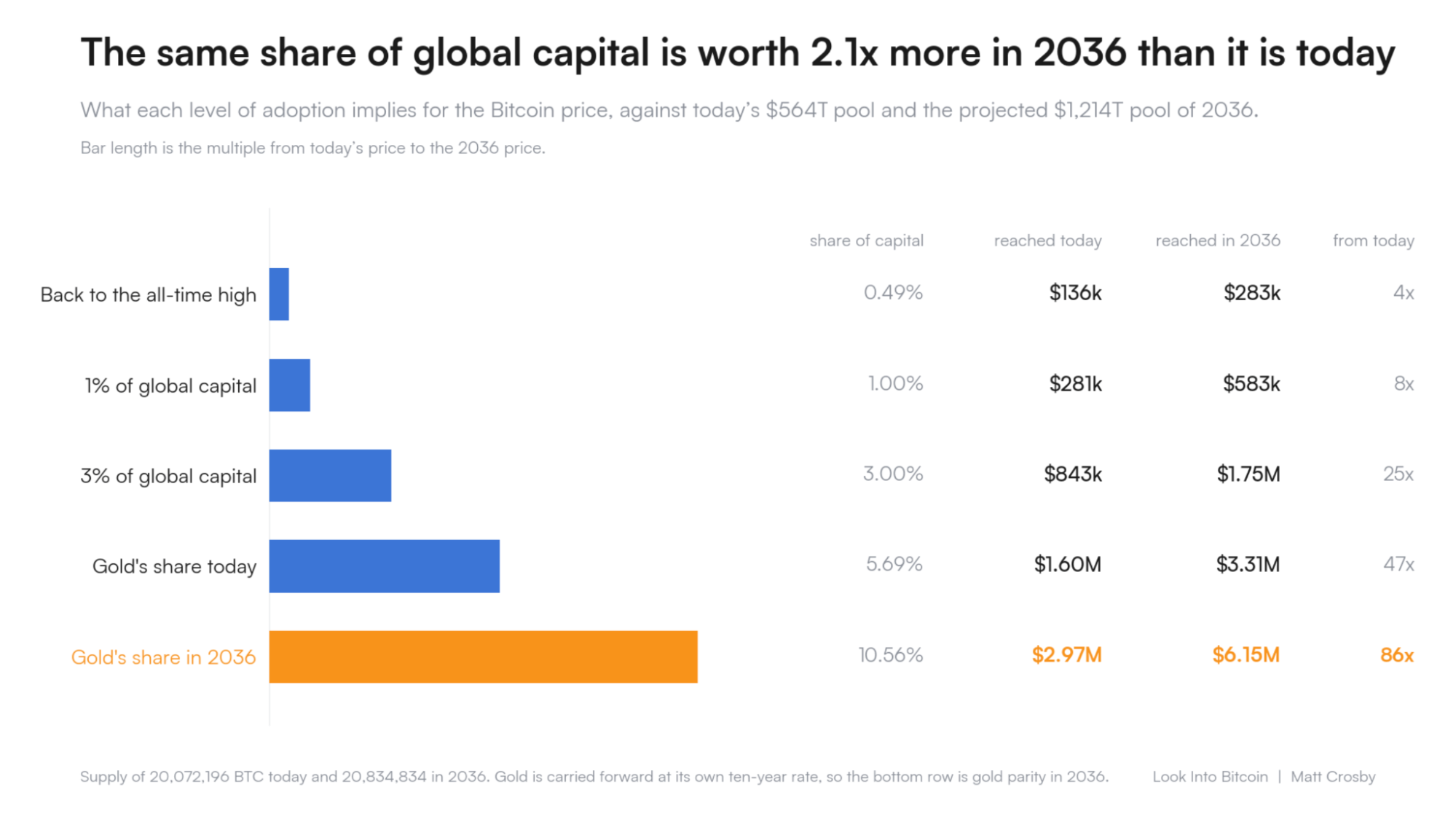
Figure 5: Bitcoin prices implied by each level of adoption, today and in 2036.
The previous all-time high represented around 0.49% of global capital, which is about $136,000 in today's terms and closer to $283,000 by 2036. A 1% share works out at $281,000 today, $583,000 by then.
What It All Means
Most people badly misjudge how little capital it actually takes to move this market. A 1% rotation from gold, private markets and 0.1% of equities puts Bitcoin near a quarter of a million dollars and still leaves it under 1% of global capital. A tiny rotation in the grand scheme of things, and it really outlines just how small Bitcoin really is today, how early we are, and how BTC still provides the best asymmetric opportunity of any asset.
Watch our most recent YouTube video here:
Bitcoin: New Highs Are The Easy Part
@MattCrosbyPro
Research Director
Any information on this site is not to be considered as financial advice. Please review the Disclaimer section for more information.