Is Cheaper Bitcoin Actually A Better Buy?
10 de noviembre de 2026
Author: Matt — Director of Research & Analytics
Bitcoin has pulled back from the high $80,000s to the mid-$70,000s. It does feel like a discount, but I wanted to test whether cheaper really was better. Does buying below newer investors’ cost basis improve the odds, or are we simply buying into a deeper downtrend?
Before buying the dip:
- Short-Term Holder MVRV has slipped below 1 as newer holders fall underwater in aggregate.
- Since 2018, deeper discounts haven’t consistently improved the chance of higher prices.
- Regular buying with extra purchases below 1 outperformed dip-only buying in the comparison.
Back Underwater
Short-Term Holder MVRV compares Bitcoin’s price with Short-Term Holder Realized Price, the aggregate cost basis of newer holders. It has now slipped below 1. These investors are underwater as a group, but previous breaks below this level have also marked the beginning of much steeper declines.
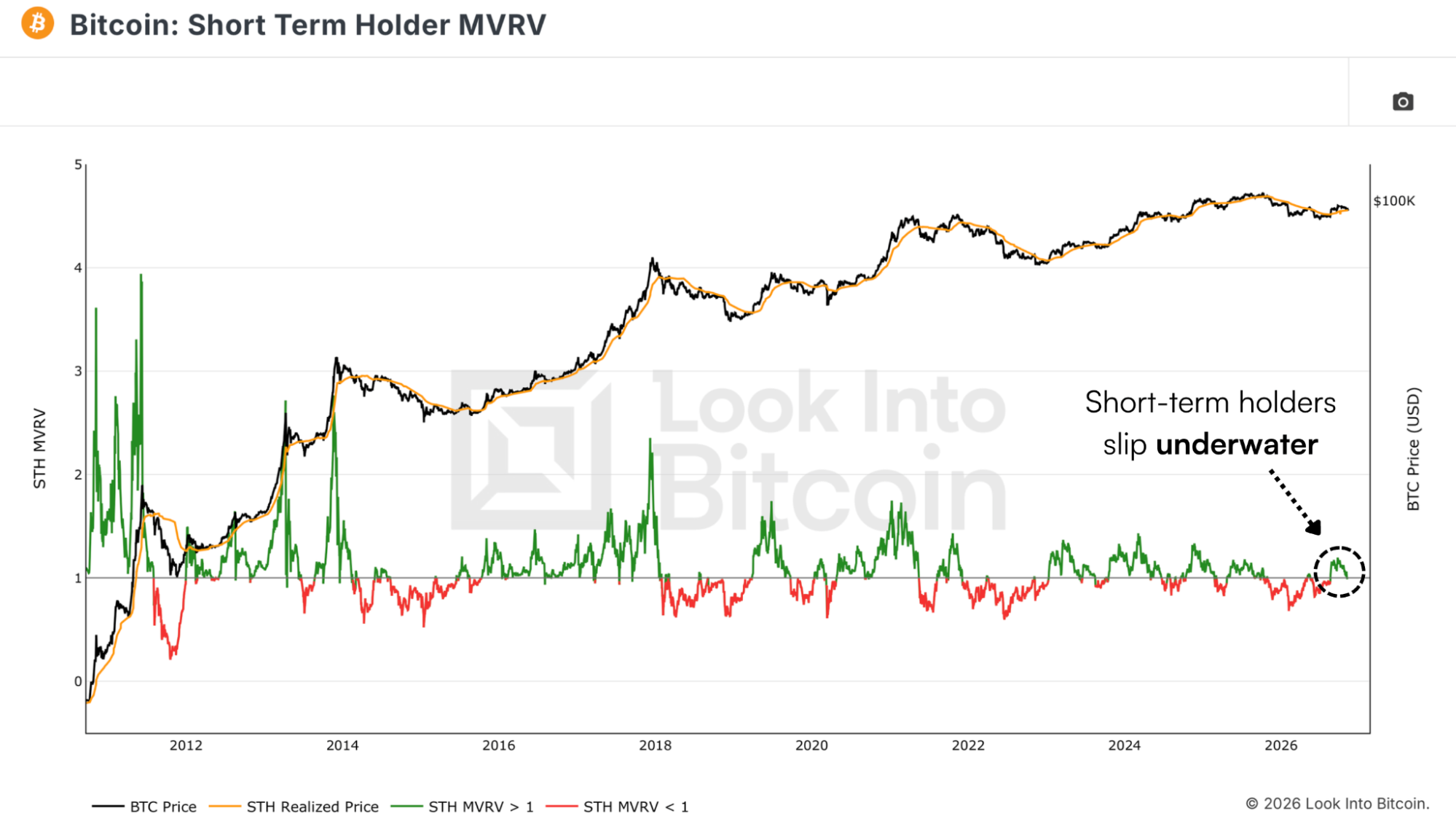
Figure 1: Short-Term Holder MVRV slips below 1 as price falls beneath the cohort’s cost basis.
Cheaper Isn’t Always Better
Looking at the data since 2018, lower Short-Term Holder MVRV readings didn’t consistently give a higher chance of recovery. At 180 days, the 0.80–0.90 band saw Bitcoin higher only 46% of the time. The 1.10–1.20 band recorded 71%.
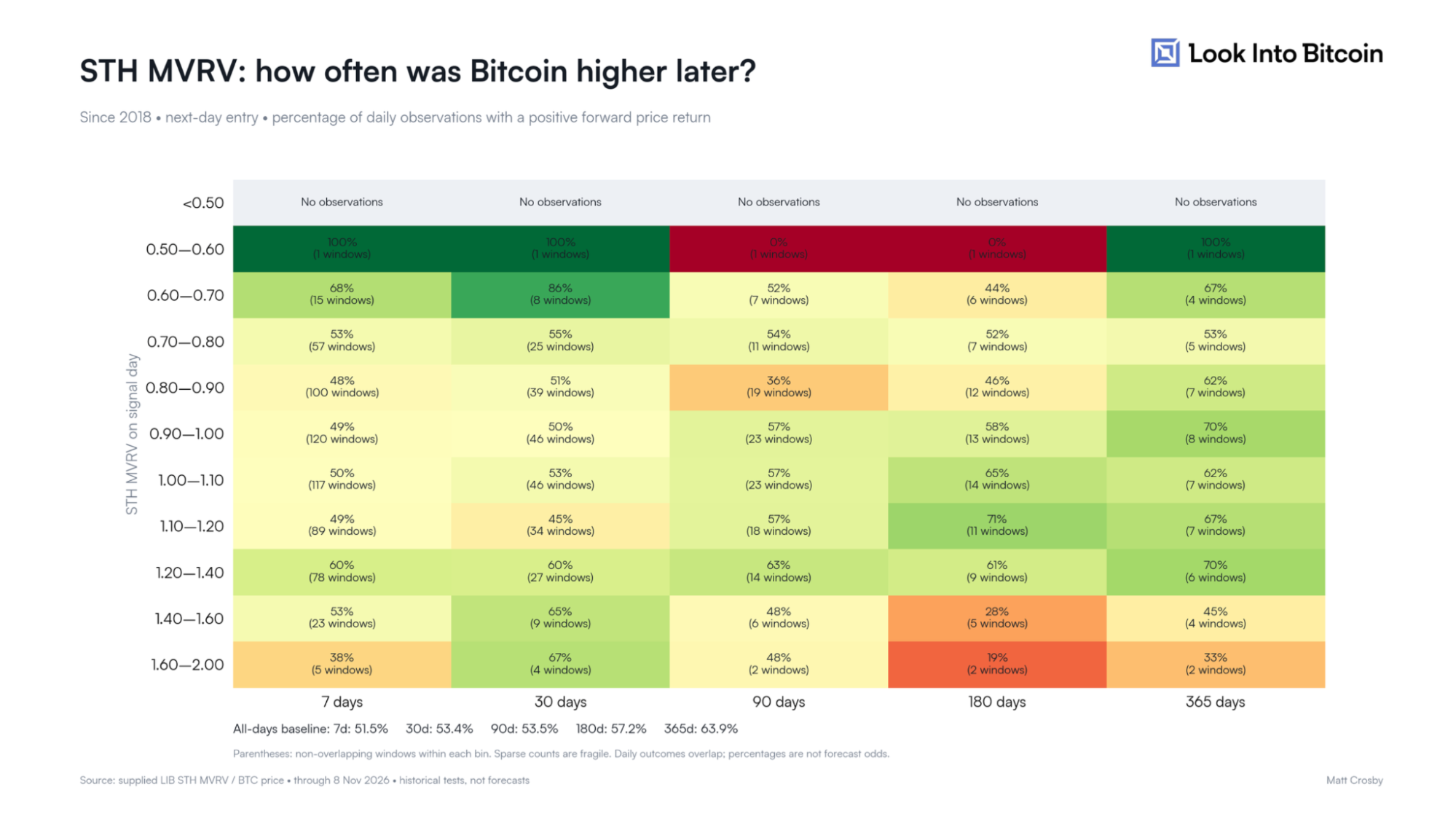
Figure 2: Since 2018, deeper Short-Term Holder MVRV discounts show mixed forward outcomes.
That’s why I want to consider the trend alongside valuation. Bitcoin is currently above the 200-Day Moving Average, whereas the failed recovery in May met resistance there. Buying near the cost basis during an uptrend is a different proposition from buying below it during a continuing bear market.
What’s The Payoff?
At the time of writing, Short-Term Holder MVRV has dipped beneath 1, placing it in the 0.90–1.00 band. Over 180 days, and since 2018, that band has delivered a 23.5% median return across all outcomes. Its 57.8% frequency of higher prices was only slightly above the 57.2% all-days baseline.
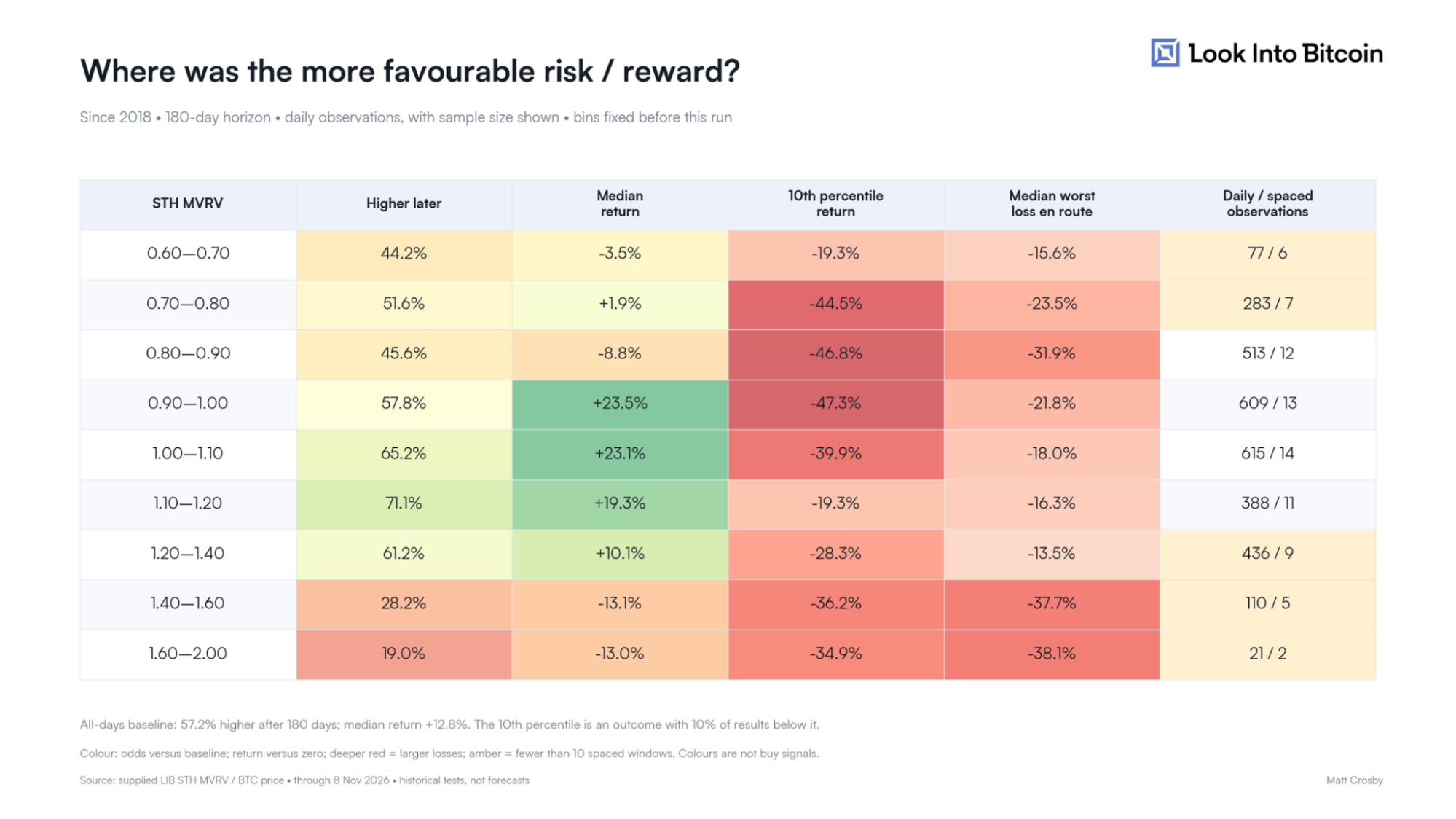
Figure 3: The 0.90–1.00 band records a 23.5% median return over 180 days.
However, for this band the potential downside was substantial, with the 10th-percentile return being −47.3%, and the median worst loss along the way being −21.8%. I see opportunity here, but this is high risk, high reward.
Keep Buying
The final comparison gives each buy strategy the same capital and includes unspent cash. Regular buying with a dip rule came out ahead. Invest half the cash monthly while Short-Term Holder MVRV is at least 1, then deploy all available cash when it falls below 1.
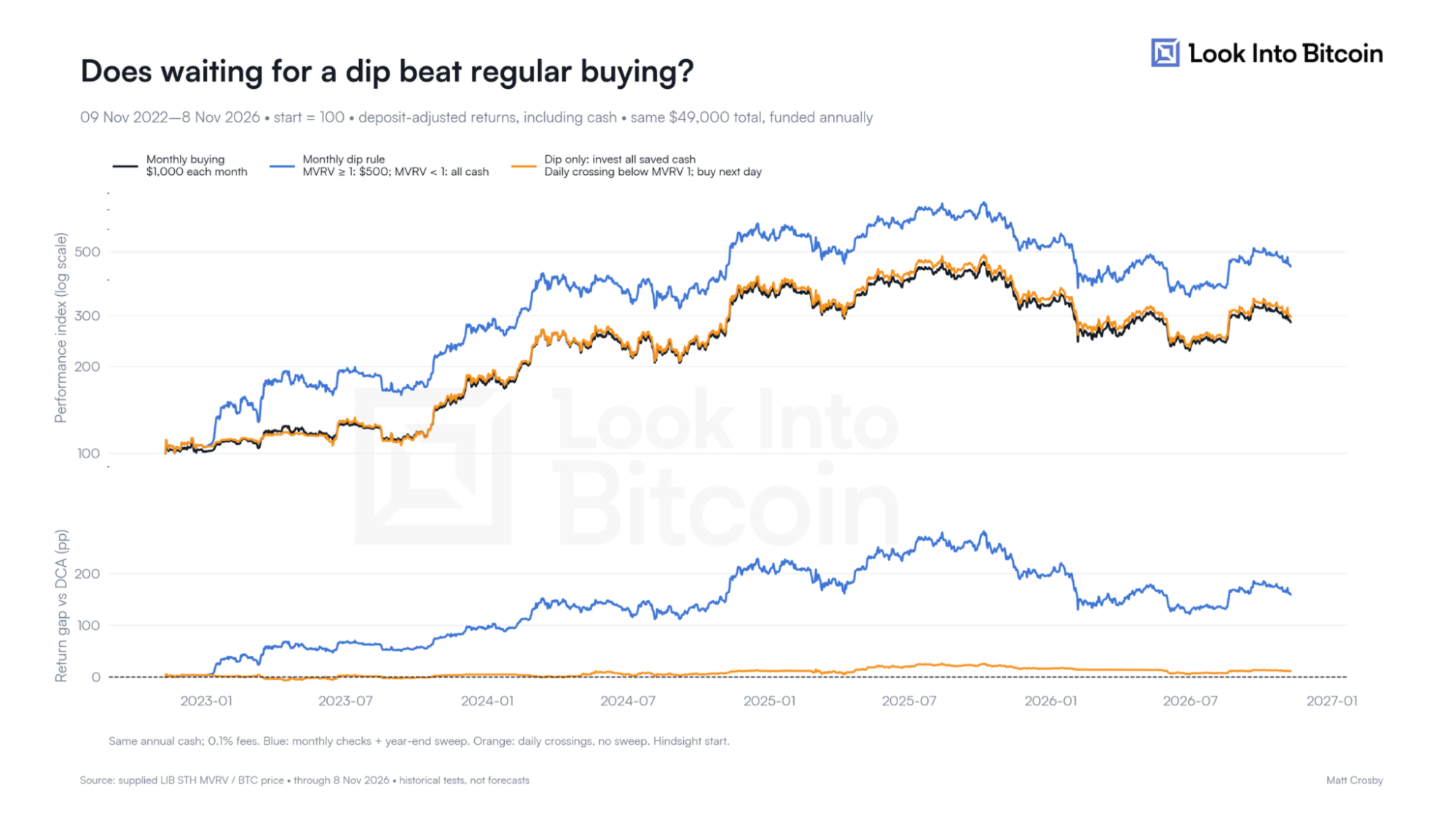
Figure 4: Regular buying with a dip rule leads the equal-funded comparison since November 2022.
Waiting exclusively for dips finished close to simply buying $1,000 every month. Keeping some regular exposure while saving money for discounts worked better in this period than trying to get the perfect entry.
Buying With Context
I think the combination of this valuation and nearby support makes Bitcoin attractive here. The lesson for me is to keep accumulating while leaving room to buy more at a discount. A lower price alone isn’t enough, and getting the exact bottom isn’t necessary.
Subscribe to the Look Into Bitcoin Substack for more research throughout the week.
For more on this, watch our recent YouTube video here:
Before You Buy Another Bitcoin Dip, Watch This
Have a lovely week, and I'll see you in the next one!
Research Director
La información contenida en este sitio no debe considerarse asesoramiento financiero. Por favor revise la Descargo de responsabilidad para más información.