Treasury Companies Are Looking Tasty
11 de septiembre de 2026
Author: Matt - Director of Research & Analytics
Bitcoin Magazine Pro is now Look Into Bitcoin.
Same platform, same team, same subscription: only the name and web address have changed. All old links redirect automatically. You don’t need to do anything differently.
It’s good to be home. Find us at lookintobitcoin.com.
MSTR is up close to 50% from its lows. I've been accumulating since the low $90s, and I think the treasury company trade is starting to look attractive once again. This week is a proper look at why, with the numbers, the targets, and the fairly long list of caveats that come attached.
If you’re in a hurry:
- MSTR's recent drawdown of around 85% was pretty comparable to the previous cycle's 89%.
- Strategy has started buying back STRC from USD reserves, which hopefully reduces future MSTR dilution.
- One Bitcoin buys around 570 MSTR shares today; last cycle that fell to 176.
- My take is that with a beta of 1.43 that skews to the upside, a small treasury company allocation is a sensible way to add high beta Bitcoin exposure.
- On a 1x NAV with no further accumulation, Bitcoin reclaiming $126,000 puts MSTR at ~$250 per share.
Comparable Bear Markets
An 85% drawdown is not a small thing to sit through, and MSTR has now done it twice. The previous cycle took it down 89%, this one 85%, and in both cases the low arrived with a weekly RSI bullish divergence. Price has since broken back above the 20-week moving average. The 50-week and 200-week are still overhead, and those are the next real resistance.
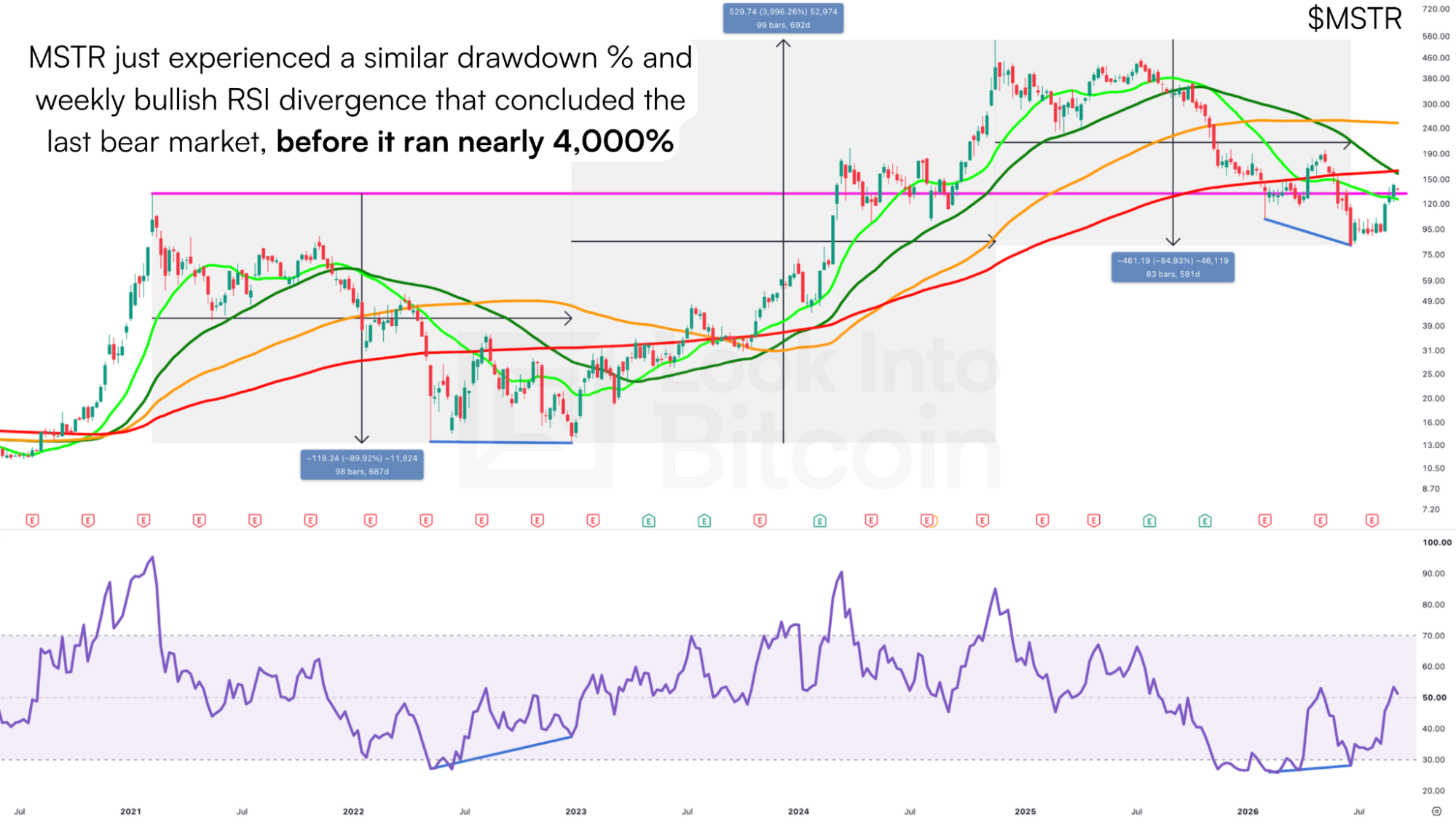
Figure 1: Weekly RSI shows a bullish divergence at both MSTR bear market bottoms.
Price is close to the previous cycle's all-time high around $130. That old high has picked up company since: the 20-week moving average now sits on it, and so does a large volume cluster, which should make the whole region fairly strong support. Above it, a second cluster and both the 50-week and 200-week converge around $160 to $170. Between here and there, not much gets in the way, so there could be some room to run.
The STRC Buyback
Saylor and Strategy have found something to do with their money besides buying Bitcoin. They have started repurchasing STRC, which, to their credit, has rebounded from the low $70s to around $98. Confidence will take a while to return, especially with Strive's SATA paying daily dividends and holding its $100 peg more consistently, but it is a step in the right direction.
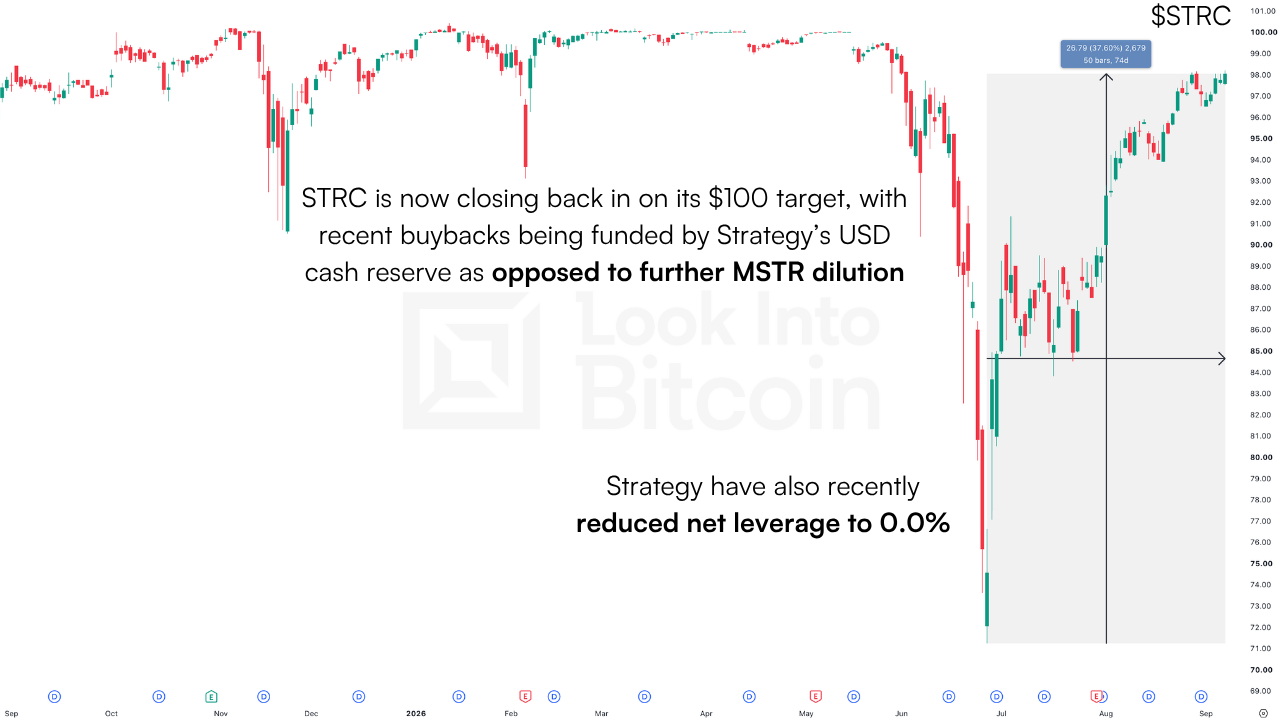
Figure 2: STRC has recovered from the low $70s to near its $100 target.
The buyback was funded from USD reserves rather than common share dilution, which is what I've been arguing for. Net leverage has since dropped to 0% and the USD reserve set aside for STRC dividends has grown a lot. Saylor took plenty of stick for selling Bitcoin near the lows, and the timing was impeccable in the worst possible way. It did prove that dividends won't come entirely from diluting common shareholders, though, and this is uncharted territory, so they get some leeway.
Measuring MSTR In Bitcoin
Treasury companies give you high beta: correlated to Bitcoin, but with the moves amplified in both directions. MSTR's beta is 1.43, and it runs hotter to the upside than the downside, which is what you want early in a bull market. Holding BTC outright still wins on a risk-adjusted basis over a multi-year window, but that window contains a bear market where Bitcoin fell 53% and MSTR fell a lot further.
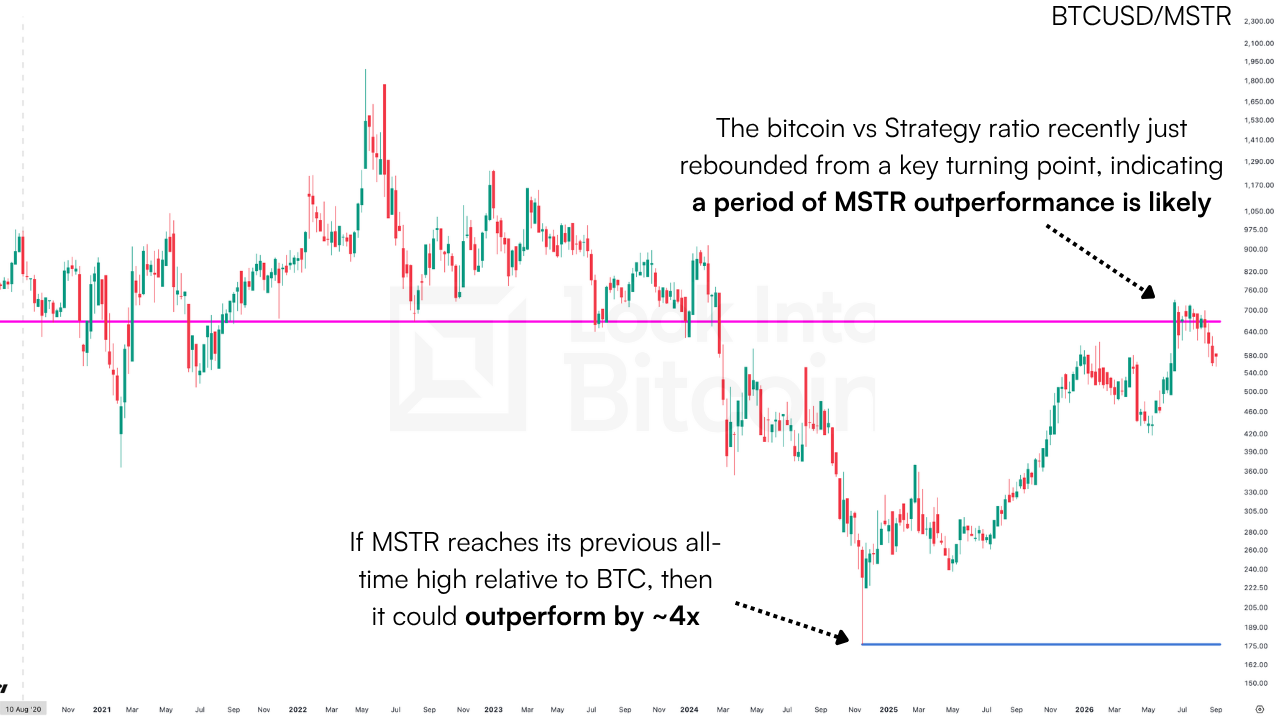
Figure 3: The BTCUSD/MSTR ratio, now around 570 against 176 last cycle.
Since the point of all this is to end up with more Bitcoin, the chart that matters is BTCUSD/MSTR: how many shares one Bitcoin buys. That is around 570-580 today, against 176 at the last bull market low, MSTR reaching that again will outperform Bitcoin by roughly 4x from bottom to top. The level I'm watching is 520, which flipped from support to resistance last cycle. At current Bitcoin prices that is roughly $150 a share, just under the $160 resistance zone. Clear both and I think it's off to the races.
Running The Numbers
Strategy holds roughly 845,000 BTC against 424 million fully diluted shares. Bitcoin reclaims its $126,000 all-time high, Strategy buys nothing more, NAV stays at 1x, and you get $250 a share. Even after a near 50% rally, it screams undervalued. These use market cap, not enterprise value, so they differ slightly from Strategy's dashboard.
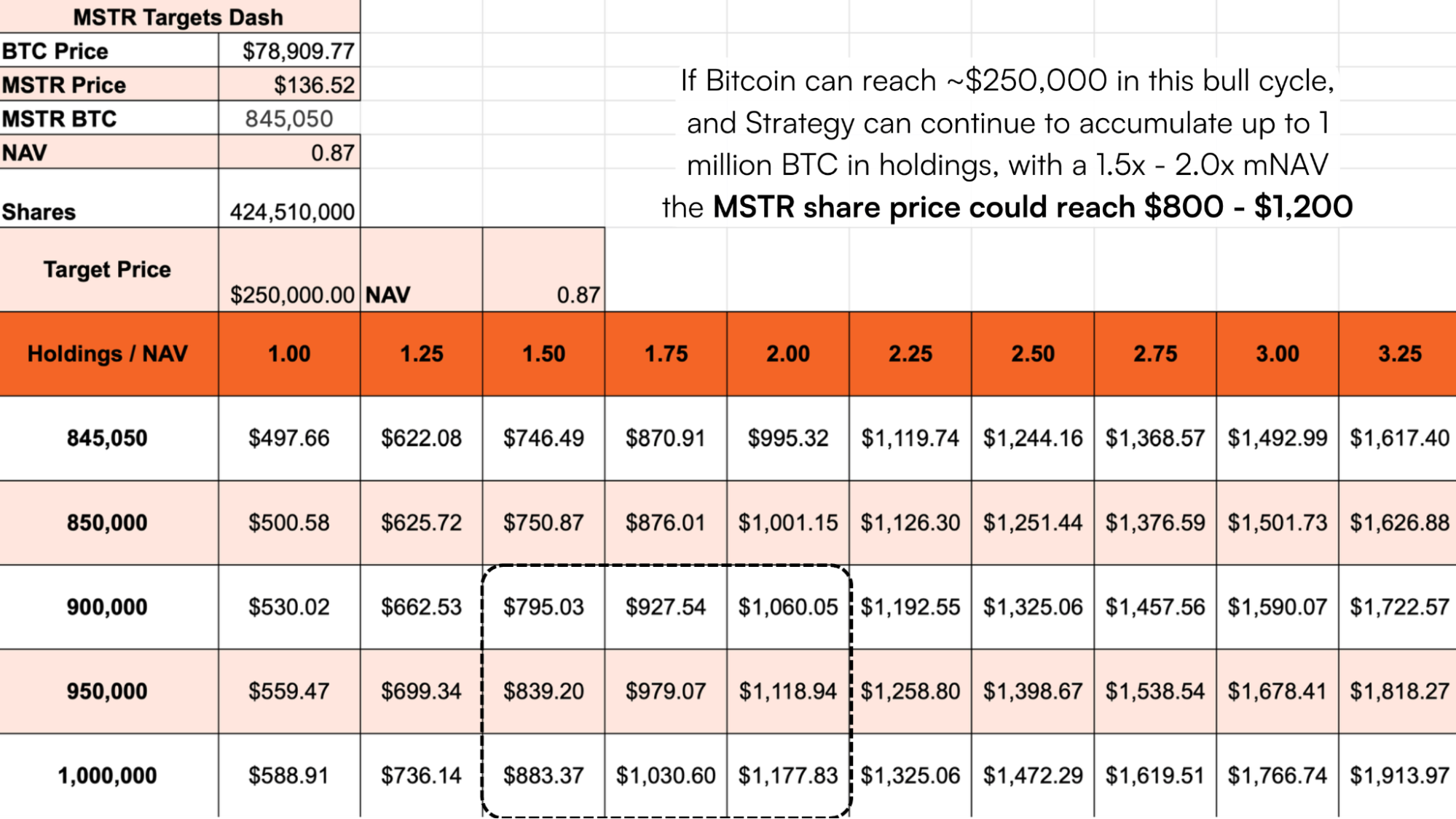
Figure 4: MSTR at 0.87 NAV today, with target prices modelled up to 3.25x.
Push to a million Bitcoin at $250,000 a coin and the arithmetic gets silly. Last cycle the NAV premium ran above 3x. I doubt we see that again, given the dividend burden and the dilution common shares have swallowed, but even a 1.5x - 2.0x mNAV puts $1,000+ per share on the table.
Beyond MSTR
The same ratio trick works on the rest of the field. MSTR divided by Strive is drifting lower, so Strive has been winning: one MSTR share buys about five Strive today against sixteen in February, roughly a 3x. Smaller and more speculative, but potentially worth a small allocation, along with some other smaller and more speculative treasury companies.
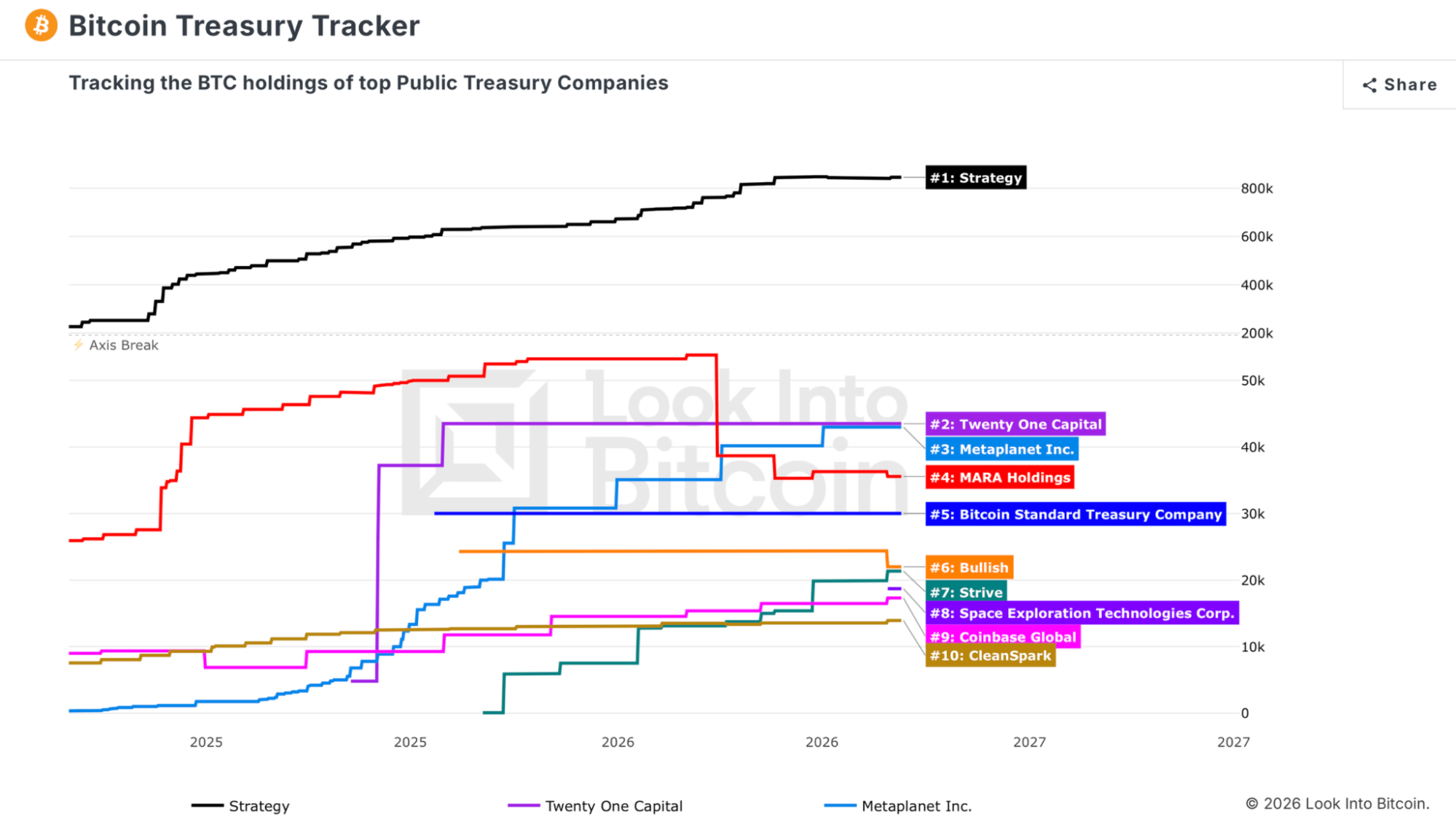
Figure 5: BTC holdings of the top ten public treasury companies.
To Sum It Up
Plenty of ifs, buts, and maybes in all of that. Treasury companies carry leverage and third-party risk, and if Saylor goes off the rails, you learn fast that MSTR isn't Bitcoin. That's why my Kelly analysis caps this at 8%. These are short-term plays with one job: come out holding more Bitcoin than I went in with. Have a lovely week, and I'll see you in the next one.
Watch our most recent YouTube video here:
Bitcoin: MSTR Has Huge Upside Potential
@MattCrosbyPro
Research Director
La información contenida en este sitio no debe considerarse asesoramiento financiero. Por favor revise la Descargo de responsabilidad para más información.