Thinking Bigger
25 de septiembre de 2026
Author: Matt - Director of Research & Analytics
I know talking about a $250,000 or $300,000 Bitcoin might sound a little ambitious when we've only just escaped months of arguing about whether the bottom is in. But the more time I spend measuring Bitcoin against other assets, the less ridiculous those numbers look. There's still a lot of ground to recover, and I think people are underestimating what a proper return to Bitcoin outperformance could mean.
Quick summary:
- From the recent high above $87,000, Bitcoin needed roughly another 45% to regain its dollar all-time high.
- Although against silver, Bitcoin still needs to gain over 166% to recover its previous ratio high, while against the Nasdaq it remains below its 2017 peak.
- Fibonacci extensions from three previous cycles cluster around a Bitcoin-to-S&P 500 ratio of 31, equivalent to approximately $237,000 at current index levels.
- Bitcoin reaching 1% of estimated global capital would imply a price around $276,000, before allowing for growth in that capital pool.
Back In Business
Since bottoming on 1 July, Bitcoin rallied roughly 50% to a local high above $87,000. From there, another move of around 45% would take us back to the $126,000 all-time high. After the year we've had, I imagine most people would be pretty happy with that.
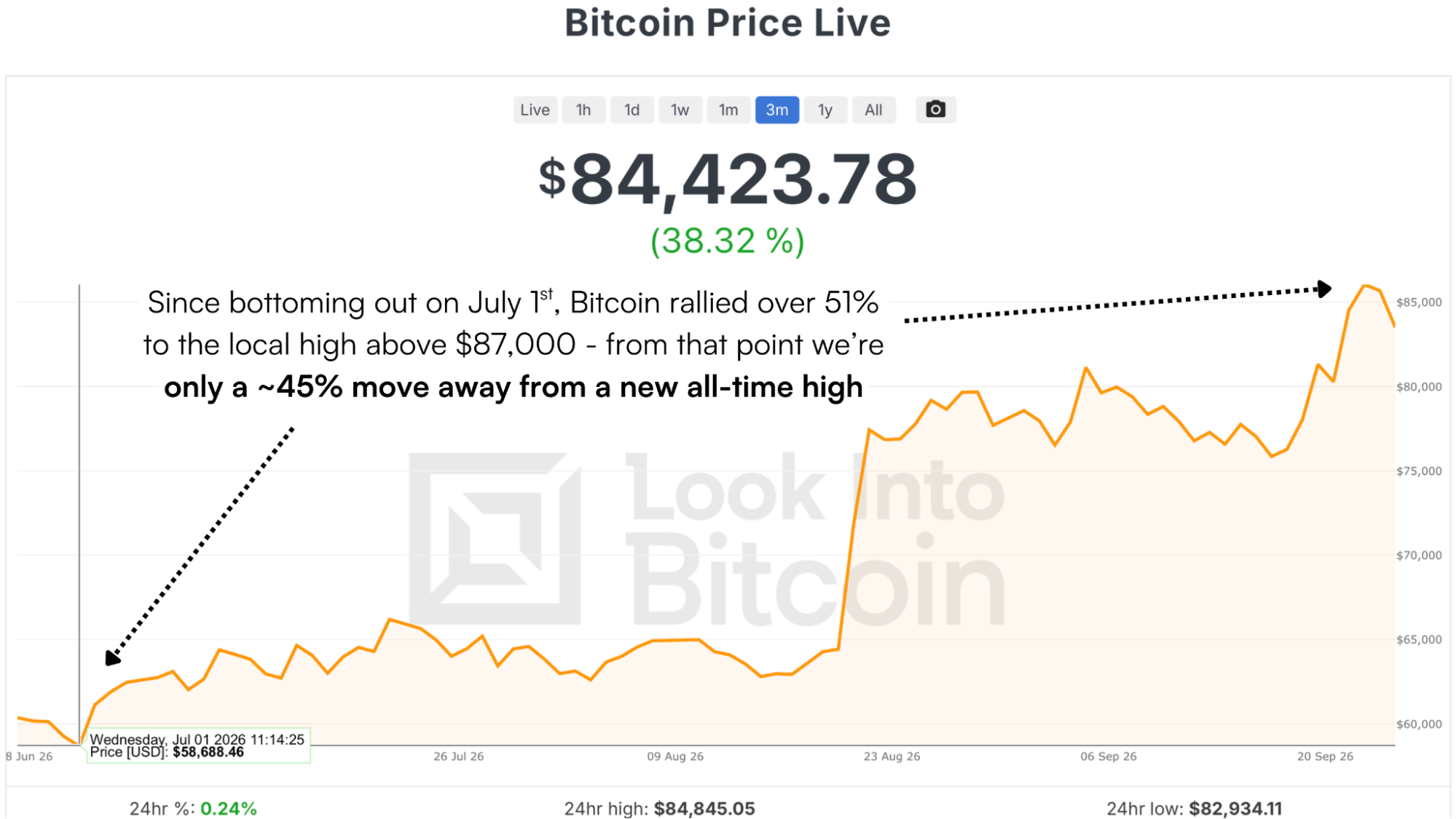
Figure 1: Bitcoin rallied from a July low near $59,000 to a local high above $87,000.
As much as I'd enjoy seeing that number on the screen again, I don't think it tells us enough. While Bitcoin has been recovering, the assets we're competing with haven't been sitting around waiting for us. Getting back to the same dollar price doesn't necessarily buy us the same amount of gold, silver or equities that it did before. I love Bitcoin, but I would quite like it to outperform the things I could have bought instead.
Silver Linings
Measured against silver, Bitcoin's bear market was a decline of around 81%, compared with roughly 54% in dollar terms. The bounce since then has been close to 100%, yet we still need over another 166% just to regain the previous high against silver! Doubling and still being that far underwater is quite an achievement, unfortunately...
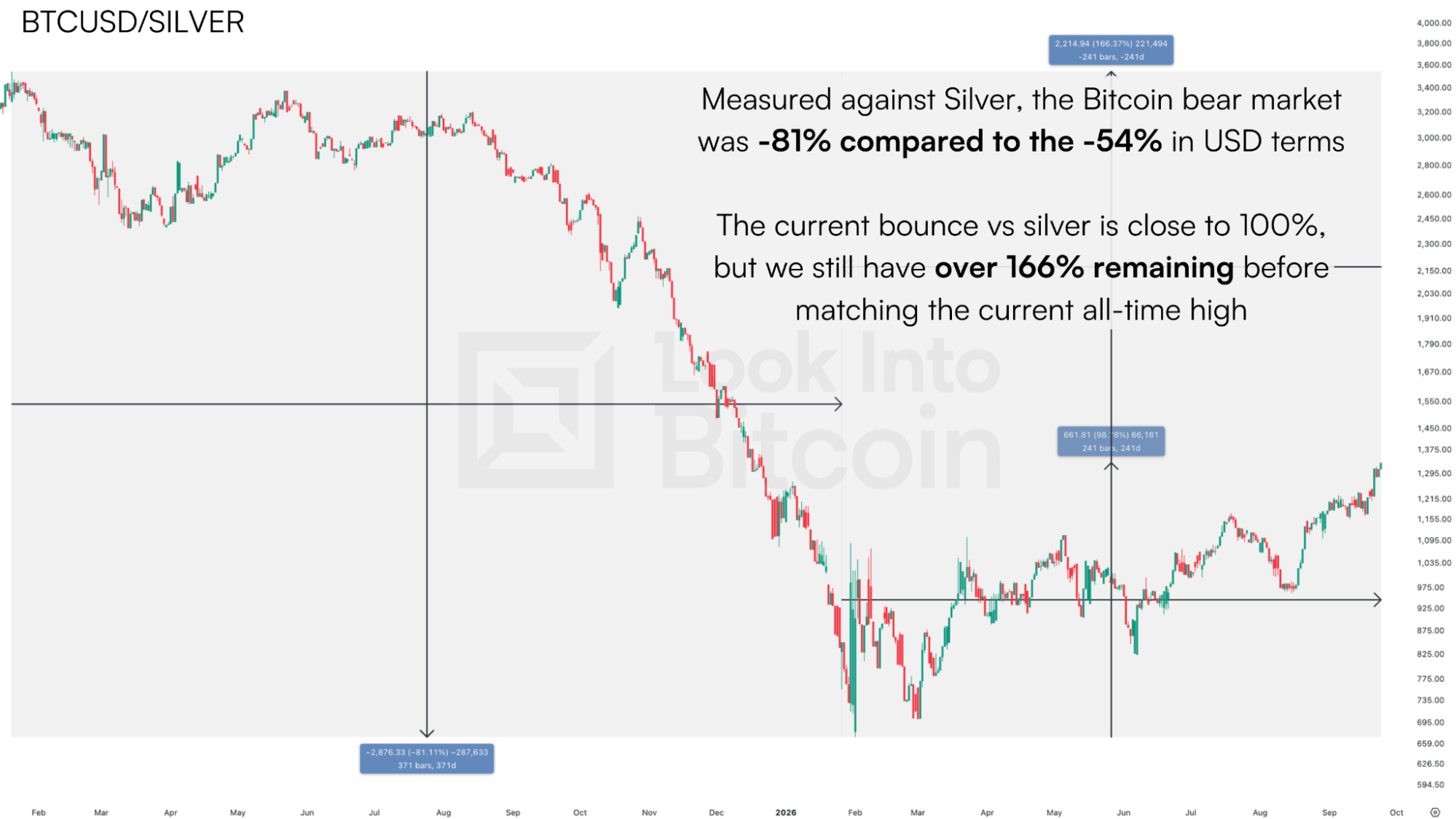
Figure 2: Bitcoin needs a further 166% gain against silver to regain its ratio high.
We've already explored what Bitcoin matching silver's recent run could mean, so I won't repeat the whole exercise here. What I'd carry forward is that an asset of comparable size has recently delivered the sort of returns people increasingly dismiss as impossible for Bitcoin.
Nine Years Later
The Nasdaq comparison is arguably more uncomfortable. Bitcoin is still beneath the relative high it set in 2017, and the 2024 to 2025 bull market only briefly pushed the ratio beyond its previous cycle peak.
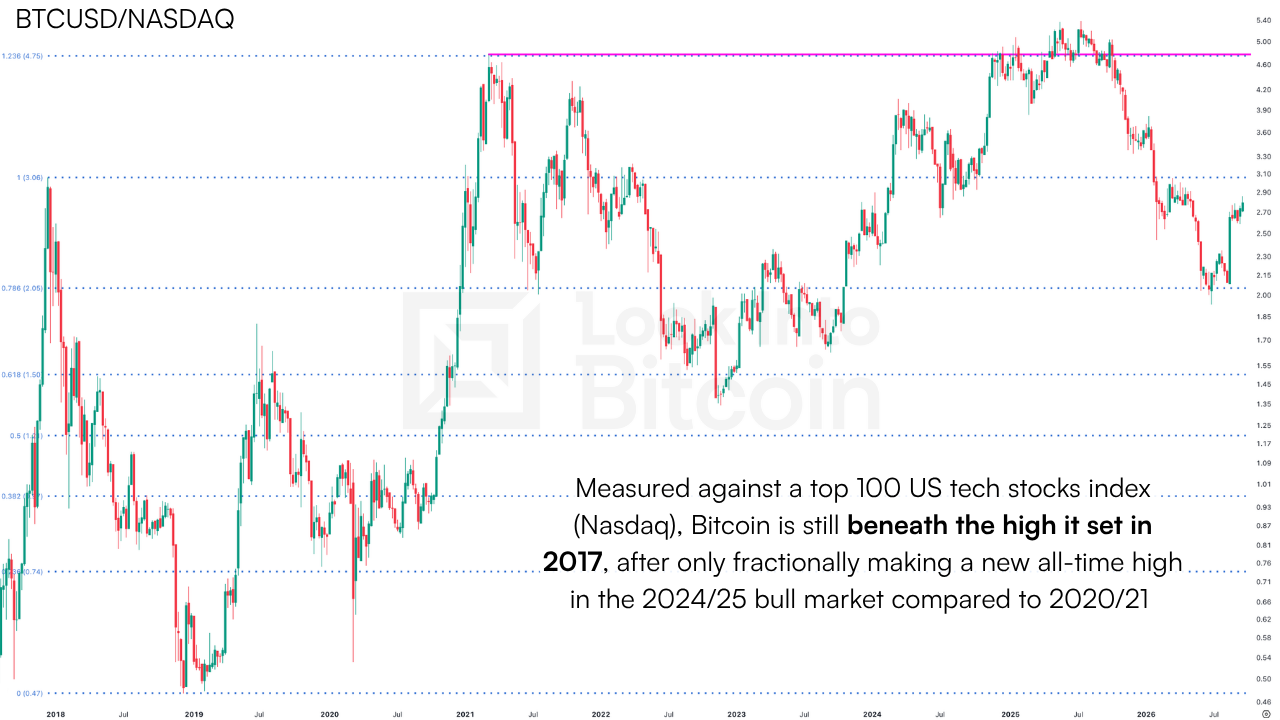
Figure 3: BTCUSD/NASDAQ sits just below its 2017 high, despite setting new dollar highs in subsequent cycles.
That doesn't mean the Nasdaq outperformed Bitcoin from every starting point over the past nine years. Far from it. Buying near the bear market lows and holding through the bull markets produced exceptional relative returns. But someone who bought at that 2017 peak could have held the Nasdaq instead and still be ahead today on this price comparison. That's a fairly long time to wait for the fastest horse in the race. I still think Bitcoin can deliver substantial outperformance from here, and these ratios show how much room there is before we can even claim to be breaking new ground.
How Big?
To get an idea of what that might look like, I've been using Fibonacci extensions on the Bitcoin vs S&P 500 chart. They project levels beyond a previous trading range from the distance between historical lows and highs, and some of them lined up closely with the peaks of the last two bull markets. Using three previous cycles, we get extensions around 30.75, 31.24 and 31.25. That's a tight cluster around a ratio of 31, equivalent to approximately $237,000 Bitcoin at current S&P 500 levels.
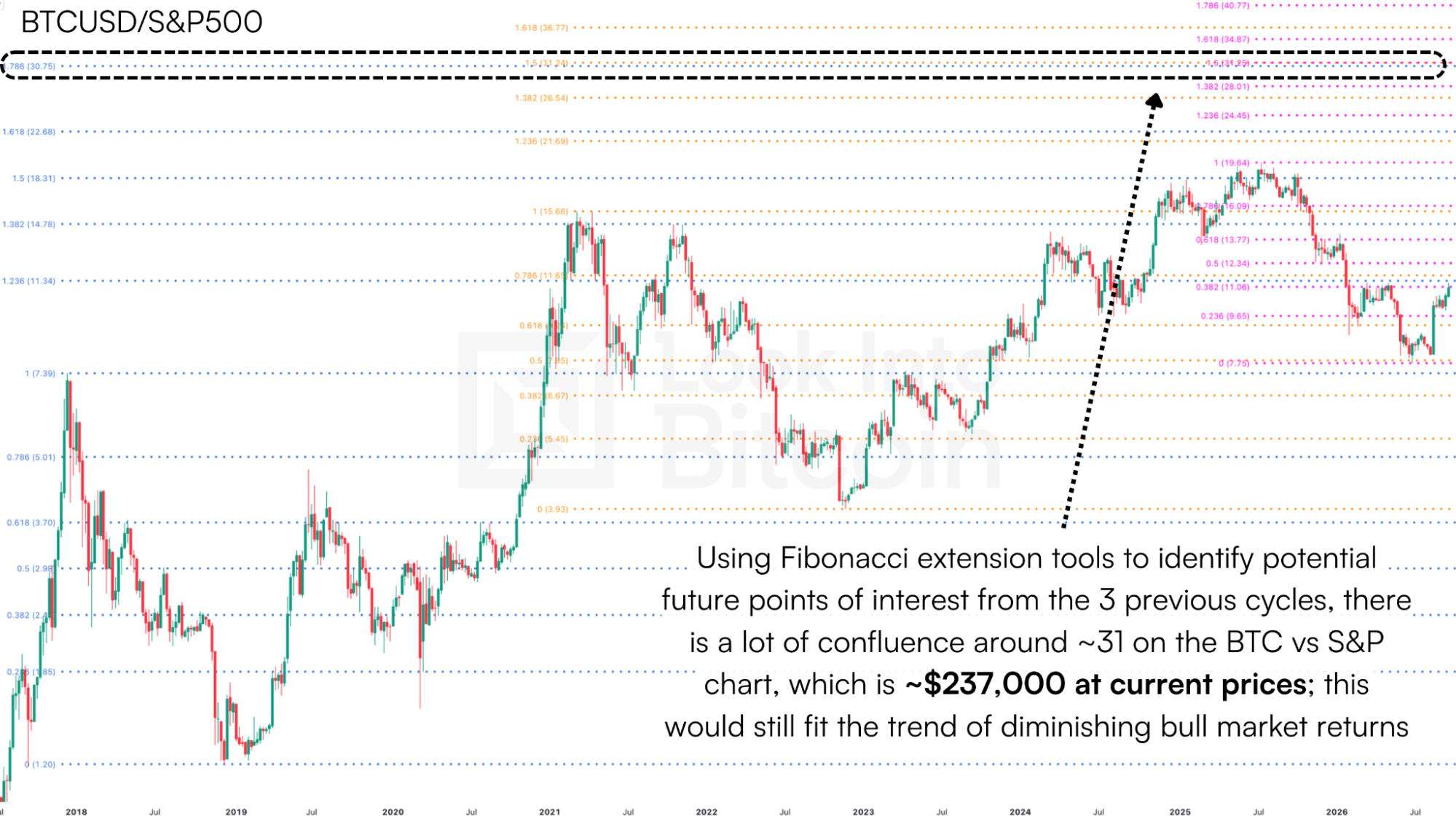
Figure 4: Fibonacci extensions from three cycles cluster near 31 on BTCUSD/S&P500.
That's a fairly optimistic number to get from drawing a few lines on a chart! The dollar equivalent also moves with the S&P. If the index were 10% to 30% higher when Bitcoin reached that ratio, we'd be looking at roughly $261,000 to $308,000. So a $300,000 Bitcoin wouldn't necessarily require us to throw out diminishing returns or assume equities stop growing while Bitcoin catches up.
One Percent
We can look at the opportunity another way using the global capital framework. Bitcoin is currently only around 0.3% of the estimated pool, having peaked at approximately 0.49% in the previous bull market. Reaching 1% would put Bitcoin at roughly $276,000 using the current capital estimate and supply.

Figure 5: A 1% share of global capital equals about $276,000 per bitcoin.
One percent sounds small, but it would still mean more than tripling Bitcoin's current share. It also doesn't require Bitcoin to replace gold, swallow the bond market or become the only asset anyone owns. And the pool itself grows over time, so the dollar value of that share can grow with it.
Where That Leaves Us
Bitcoin has to earn that larger share by attracting capital that could otherwise go into equities, commodities or the next big AI investment. Recently, it hasn't consistently done that, and a new dollar high on its own won't settle the argument. But I do think we're setting the bar a little low if $126,000 is where our imagination stops.
Looking at the relative charts, the historical returns and Bitcoin's still tiny share of global capital, there's room for a considerably bigger move than many seem willing to entertain. I'd quite like to see our favourite magic internet money remind people why they bought it in the first place.
Watch our most recent YouTube video here:
Bitcoin: The Upside Most People Are Missing
Research Director
La información contenida en este sitio no debe considerarse asesoramiento financiero. Por favor revise la Descargo de responsabilidad para más información.